
“Mirror, mirror on the wall….” – Do horses have “awareness of self”? A discussion on paradigms, big bangs, evolution, and human prejudice
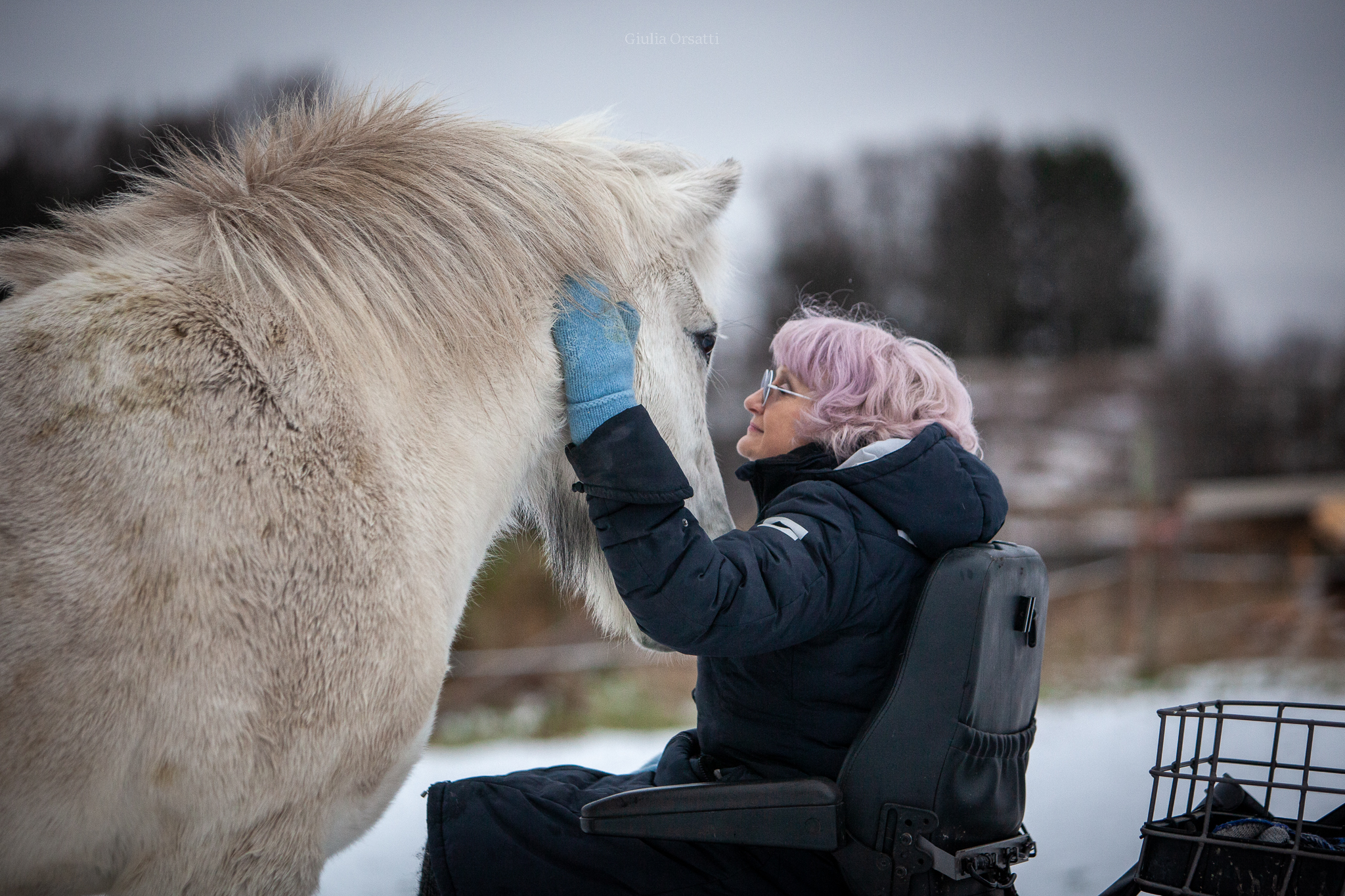
In the latter half of the 20th century, one of the prominent topics in psychology was the exploration of how a "sense of self" develops, both in human children and in some of our closest relatives, the great apes. Observing chimpanzees interact with a mirror provides a compelling indication that they possess an awareness of their actions. They DO know, what they are doing 😉 ( https://www.youtube.com/watch?v=OsoNKlyFtpI ).
Gordon G. Gallup, Jr. and Beulah Amsterdam are pioneering scientists renowned for conducting the first systematic investigations into the sense of self. The methodology of the "mirror self-recognition" test was developed independently by Gordon G. Gallup for chimpanzees (1968; 1970) and by Beulah Amsterdam for infants (1972). Since then, the "mirror self-recognition" paradigm has been used as an indicator of "self-awareness" in great apes, humans, and other primate species, such as monkeys. Moreover, in recent years, several non-primate species, such as elephants and dolphins, have been studied using adaptations of the "mirror self-recognition" paradigm.
When subjected to the mirror self-recognition paradigm, nearly all species tested so far, including human children, initially perceive the mirror image as another individual of their species. It is only after a period of exploring their own reflection—by making movements, facial expressions, and so on—that they begin to understand that the image is of themselves (if the species in quest “passes” the mirror self recognition test). This test thus observes the transition from behaviors directed at others (an assumed conspecific) to those directed at oneself. Behaviors directed at others are prompted by the perception of another individual, while self-directed behaviors involve inspecting body parts that are usually not visible without a mirror. If you're interested in learning more about the mirror test, Wikipedia offers a comprehensive explanation. https://en.wikipedia.org/wiki/Mirror_test ).
Without any training, only the great apes (Hominidae) will use their hands to investigate a mark on their bodies that is visible only with the aid of a mirror. In contrast, rhesus macaques and other monkeys do not exhibit this behavior. This distinction within the primate order has led to the belief that there is a qualitative difference in self-concept that sets hominids (humans and great apes) apart from other primates (for discussion see e.g. de Waal 2019). Based on this assumption, the development of a self-concept outside the primate order was once considered unthinkable. However, both of these assumptions have been challenged over the past few decades, and much of what we will discuss in today’s blog will focus on this topic.
Since then, various research groups have attempted to adapt the mirror self-recognition paradigm to other species. The academic debate over whether these species pass the test remains ongoing, often intense, and at times contentious. According to some, including Gallup and his colleagues, only humans and great apes have successfully passed the mirror self-recognition test. However, scientific literature has reported instances of mirror self-recognition in several other species, including elephants, dolphins, magpies, a certain type of fish, and, notably for equestrians, horses.
Agreed, the investigation of self-recognition in animals, particularly through the mirror self-recognition paradigm, is a complex issue. This paradigm, along with the research question itself, is arguably one of the most challenging to explore in the fields of animal behavior and cognitive function. Am I qualified to discuss it? I wouldn't tackle this topic if I didn't believe so. The question of self-awareness, its development in human children and other species, or its evolution in general, has been a significant part of my psychology education, especially due to my specialization in Biopsychology / Neuroscience. At least one prominent researcher involved in this area was a highly esteemed academic mentor of mine. Am I qualified to assess the ongoing academic and scientific debate about the mirror self-recognition test? Absolutely—I have served as an associate editor for a scientific journal for about 20 years, with the last four years as Editor in Chief (I've just recently taken a break). During my editorial career, I have overseen hundreds of peer reviews of academic articles and have personally reviewed over 100 scientific papers. Yes, I am indeed familiar with the "business" of science.
This brings us to an important preamble for this blog: we will focus exclusively on scientific articles published in well-established journals. Some of these journals are among the most reputable in the life sciences, and all the studies we discuss are of the highest quality. Peer review ensures that these articles have been evaluated, reviewed, and critiqued by experts in the field. A manuscript is only published if these experts recommend it. Often, authors are asked to make minor or major revisions, and sometimes a manuscript is rejected if reviewers have concerns about the results or identify significant flaws in the methodology. Therefore, if a paper is published in a peer-reviewed journal, it has undergone rigorous quality assurance. In conclusion, regardless of how intensely a paper is criticized in the current scientific debate on the mirror mark test, all the papers I reference are of the highest quality that our academic system can provide.
Let's dive in and explore some of the challenges involved in adapting the mirror self-recognition test, also known as the mirror mark test, to species other than primates. Typically, in this test, animals are marked—often while under anesthesia—and their reactions to this mark are observed when they face a mirror. The following video illustrates the mirror test as applied to Asian elephants: https://www.youtube.com/watch?v=-EjukzL-bJc
The video also effectively explains the phases animals undergo before realizing that the reflection in the mirror represents themselves, rather than another conspecific. For the mirror test to be considered valid, animals typically need to pass through certain phases: exploring the mirror itself, habituating to the mirror when it is covered, exploring the uncovered mirror and responding as if to an expected conspecific, and most importantly, using the mirror image to explore their own body. This is usually tested by marking the animal, and the video about elephants demonstrates how they use their trunks to investigate the mark.
However, this example also highlights some challenges when applying the test to other species. For instance, what happens when the subject is a dolphin, which lacks arms or a trunk to physically explore the mark (e.g., Loth et al. 2022)? This raises questions about how the test can be adapted to accommodate the unique anatomical and behavioral characteristics of different species. To take it to the extreme: Could the half-blind mole, which has four legs but an extremely limited sense of sight, even see the mark on his body in the mirror?
Here, we encounter the initial challenge in adapting the mirror test for different species: a specific behavior must be predetermined as indicative of the animal recognizing the mark. Typically, this involves the animal attempting to manipulate or remove the mark. However, how do we define such behavior in animals that cannot "reach" due to their anatomy, such as dolphins and horses? In these cases, alternative behaviors must be identified, such as repeated movements in front of the mirror or other signs of increased attention, as observed in the dolphin study by Loth et al. (2022). In the two available studies on horses, these defined behaviors were related to "scratching". The debate over whether these studies genuinely demonstrate self-awareness begins at this point. Is the defined behavior truly indicative of the animal responding to the mark on its body?
Let’s take the horse as an example. Horses do not have a hand or a trunk to use for scratching, they can rub their body part against something such as a tree, they can rub their face against their forelimbs, they can role on the ground in order to “scratch”. Which of these behaviors should be defined as the required outcome indicative of the fact that horses have recognized a mark on their body?
Furthermore, additional questions arise: How significant is it for an animal to remove the mark? Is it important at all for this species? While great apes are typically meticulous about cleaning their hair and grooming plays a crucial social role, horses, despite being highly social and engaging in mutual grooming, have a completely different attitude towards substances like dust and mud on their bodies. As we know, rolling in mud or sand is not only a source of pleasure for our four-legged friends but also a form of "fur-care" behavior. Sometimes, they don't even wait for the rider or saddle to be removed before indulging in this activity 😉. A good layer of mud provides protection against insects and parasites, which a primate might simply remove with their hands or ask a companion to help with. Horses, however, do not have hands! Therefore, can we expect horses (or other species) to be equally concerned about a mark on their bodies? The truth is, we simply do not know.
As if the previously discussed issues weren't complex enough, the mirror self-recognition test is inherently visual. How relevant can this test be for species where vision is less critical (remember the mole 😉) than other senses, such as smell in dogs? Unsurprisingly, dogs typically fail the mirror self-recognition test. However, they succeed in a test based on olfaction, which aims to assess self-recognition (Horowitz, 2017). Naturally, these findings have sparked debate and are not universally accepted (e.g., Gallup & Anderson, 2018).
Although the methodology of the mirror self-recognition test appears straightforward, it is not. Originally developed for humans and primates, it is only reliable in its original form for these species. Nevertheless, adaptations of the test have been applied to a variety of species. Some of these adaptations are widely accepted within the scientific community as evidence of self-recognition, while others are not. In fact, some authors do not accept any results from variations of the original mirror self-recognition test as evidence of self-recognition. This has led to an ongoing, contentious, and at times "bloody" dispute about the possibility of self-awareness in non-primate species. In my view, this debate has often violated the principles of respectful, aggression-free scientific discourse, and perhaps even good scientific practice. I will revisit this point later, but first, let's examine the two most intriguing studies for those of us who love horses.
In 2017, Baragli et al. published the first data on mirror self-recognition in horses. Although it was a very small pilot study involving only four horses, it was published in the highly esteemed scientific journal PLoS One. Pilot studies, even when they do not provide clear results, are extremely valuable when establishing a new experimental paradigm. The goal is to plan the next larger study as thoroughly as possible and learn from any issues that arise in the pilot (and there is ALWAYS something that goes wrong, often more than you would anticipate 😉), so you can design a larger study while avoiding these pitfalls (though new challenges may still emerge, even when you think you have everything under control). We also appreciate seeing pilot studies published because, even if the results are ambiguous, the availability of data from imperfect studies can help other researchers working on the same topic to refine and improve their own studies.
The pilot study by Baragli et al. (2017) faced numerous challenges, as expected for the first investigation of mirror self-recognition in a new species, namely horses. Consequently, the interpretability of the data was very limited. While it was not possible to definitively conclude that the horses passed the mirror self-recognition test, it also couldn't be ruled out, as the horses exhibited some reactions that might indicate self-recognition. The authors meticulously detailed all the issues encountered in their experimental setup and made all study materials available to other researchers, allowing them to review the evidence and form their own conclusions. Furthermore, the authors were extremely cautious in interpreting their data, explicitly stating that the study is inconclusive.
This pilot study, along with others, faced significant criticism from Gallup GG Jr. and Anderson JR. in their 2018 narrative review titled "The 'olfactory mirror' and other recent attempts to demonstrate self-recognition in non-primate species." Gordon G. Gallup, Jr., the pioneer who provided the scientific community with the first systematic investigations of self-recognition in the great apes and developed the mirror test, was notably critical of the data from Baragli and colleagues (2017), warranting a closer examination.
Despite acknowledging that “….Like dogs, horses (Equus caballus) have a long history of domestication by humans, and there is growing evidence for cognitive similarities between horses and primates..." (page 18), Gallup & Anderson (2018) deny the possibility of horses exhibiting self-recognition. In fact, they challenge all data published on non-primate species, not just horses, and fundamentally reject the notion that non-primate species could possess self-recognition abilities. Their critique of the 2017 pilot study on horses is particularly pointed: "This study is too rudimentary to conclude anything about horses’ reactions to their mirror-images other than horses show apparent interest and curiosity, like many non-self-recognizing species" (Gallup & Anderson, 2018, page 18). In conclusion, their criticism of Baragli et al.'s 2017 pilot study is that the authors overinterpreted the data.
Interestingly, this is almost the opposite of the impression I had regarding how Baragli et al.'s 2017 pilot study was presented, and I consider myself quite critical. In their publication, the authors conclude: "...our horses did not match the complete expected behavioral steps to fit the mirror self-recognition paradigm. Without replication of data, the self-directed behavior towards the colored mark showed by three horses in Mark 1 and one horse in Mark 1 and 2 is not sufficient per se to affirm that horses are capable of mirror self-recognition…..” (Baragli et al., 2017, page 12). In my opinion, there is no difference between the conclusion of Baragli et al. (2017) and their critics, Gallup & Anderson (2018). Both state that no definitive conclusion can be drawn from these data regarding whether horses possess self-recognition. Therefore, I find it difficult to agree with the argument of Gallup & Anderson (2018) that Baragli et al. (2017) have misinterpreted or overestimated their results.
The same Italian group that published the 2017 pilot study refined their approach based on their initial experiences and conducted a more robust study with 14 horses. The results were published in 2021 in the scientific journal Animal Cognition, a well-established scientific journal in this field. In this study, the authors reported evidence of mirror self-recognition in 9 out of the 14 horses tested. Once again, the data are openly available, and the methodological challenges of this new paradigm, along with the results, are discussed in great detail. For those interested in a closer examination, the study is open access, and a video link is provided at the end. This film on mirror self-recognition includes footage from the most recent study on horses (Baragli et al., 2021).
https://www.youtube.com/watch?v=qzo3qFtbceE
As might have been expected, following the response to Baragli et al.'s 2017 pilot study, this new study involving a larger sample of horses also faced significant criticism from Gallup & Anderson (2022). While I agree with one (only) of their many methodological objections, I do not doubt the study's overall outcome. However, I disagree with Gallup & Anderson’s most significant objection, which concerns how the horses checked themselves in the mirror and the types of movements they made. Gallup and Anderson do not accept the criterion defined as the horses' reaction to detecting the mark on their faces. As discussed earlier, the choice of this criterion for species other than primates is crucial for evaluating whether the subject recognizes itself in the mirror.
Primates focus intently on the mirror and closely investigate it. In contrast, horses tend to stand at a distance or pass by, looking at the mirror sideways. This difference in approach between apes (and humans) and horses is due to the distinct organization of their visual systems. Primates have eyes designed for focusing; they are positioned frontally with a significant overlap in their visual fields. Additionally, primates possess a central fovea, which provides them with high visual acuity within a small spatial range.
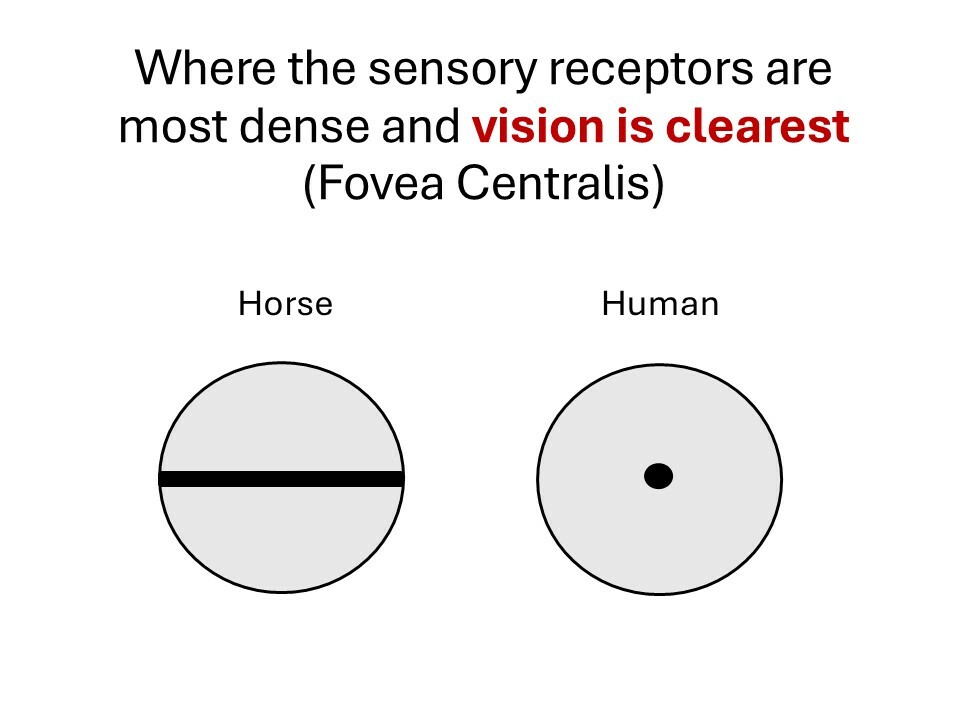
Figure 1: Differences in the spatial orientation of the fovea centralis in humans (and, by extension, primates) compared to horses. The human eye is designed for high visual acuity within a limited space directly in front of the individual. In contrast, the visual system of the horse is constructed to provide a wide-angle view of the surrounding area. The trade-off for such an all around view is a reduction in the binocular visual field.
The eyes of horses, as flight animals typically inhabiting open steppes, are perfectly adapted to their living conditions. With eyes located on the sides of their head, horses possess an almost all-around view and a fovea that functions as a "visual strip" (Figures 1 and 2).
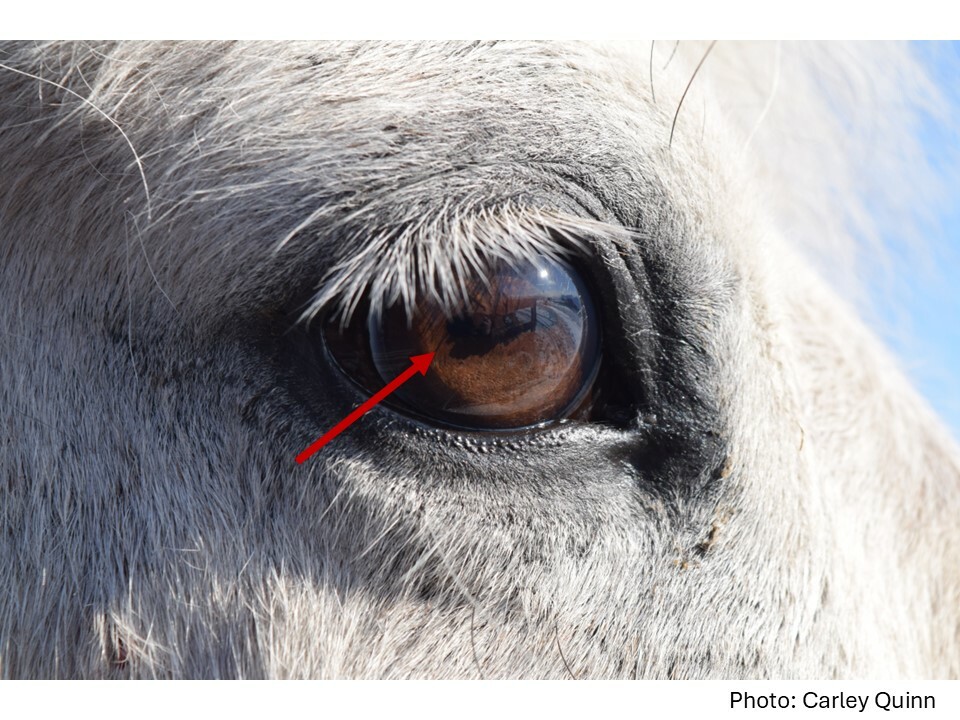
Figure 2: The fovea in horses resembles a “visual strip”
Consequently, horses have very limited binocular vision in front of them. In conclusion, horses simply cannot exhibit the same visual, investigative behavior as primates due to their anatomical differences (see Figures 1-3; the simulation by Proximal particularly illustrates this issue).
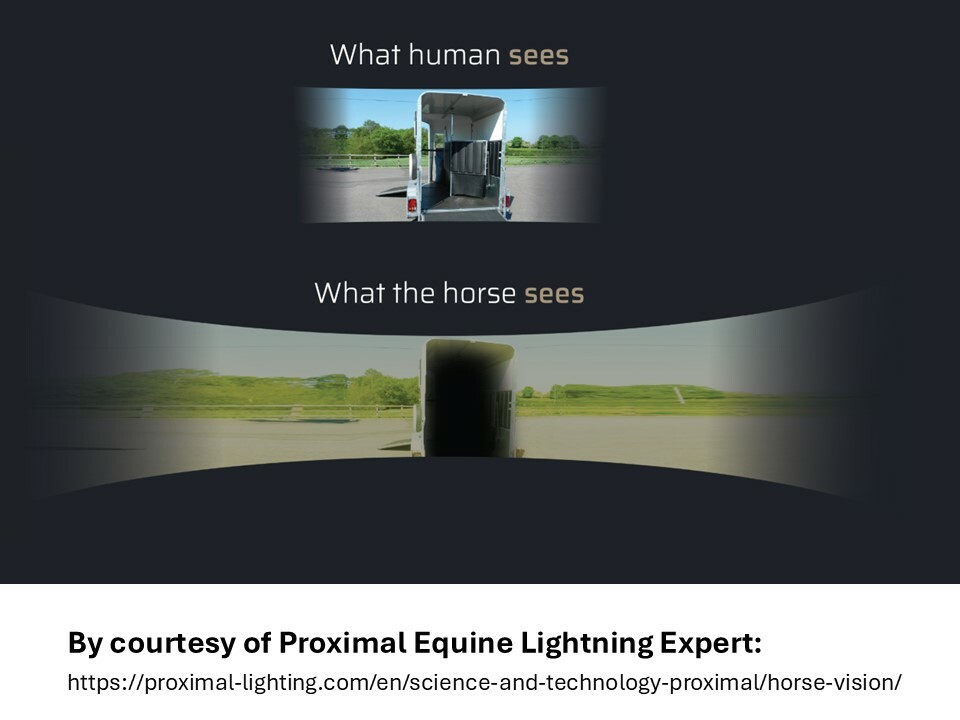
Figure 3: The design of the horse's visual system allows for the surveillance of a large spatial area, almost completely surrounding the individual. However, as a consequence horse see less well in areas directly in front of them.
Therefore, the most fundamental criticism against the possibility of horses demonstrating self-awareness in a modified mirror mark test stems from the unjustified expectation that horses can engage in similar investigative visual behavior as primates. This also includes Gallup & Andersons criticism of the criterion of “scratching” as evidence, that the horses in this study tried to remove the mark.
If the validity of the mirror self-recognition paradigm is limited by certain anatomical requirements, such as having a visual field similar to that of primates and limbs like arms or a trunk to investigate one's body, its usefulness as a measure of self-awareness must be questioned in principle. Naturally, the authors of the second, larger study on horses have addressed the critique of their study by Gallup & Anderson in great detail (Scopa et al., 2022).
Considering these critical differences between primates and horses, do I believe that horses pass the mirror self-recognition test? Yes, I do. In my view, the 2021 study of Baragli et al. provides sufficient evidence that they do. Is "their" self-awareness similar to that of hominids? Most likely not, because a chimp is a chimp, a dolphin is a dolphin, and a horse is a horse. What does this mean, and is it relevant? This question is part of a larger ongoing discussion that extends beyond self-awareness and touches on the broader topic of comparative cognitive function in general (for further discussion, see Lage, Wolmarans & Mograbi, 2022).
Those who follow "Science for Horse Lovers" have likely noticed that I typically take an evolutionary approach to behavior, cognition, and emotion. From my perspective, every living being is perfectly adapted to its way of life, having shaped its physiology and anatomy according to its "lifestyle" (https://www.scienceforhorselovers.com/en/blog-entry/of-horses-and-humans-science-and-anthropomorphism ). Within this framework, a species will possess as much "self-awareness" as is necessary for its survival, functioning, and wellbeing. Therefore, I do not view self-awareness as an on/off phenomenon.
Gallup & Anderson are highly respected experts in self-recognition in primates. However, the perspective that self-recognition is either present in the form it exists in great apes and humans or entirely absent does not, in my view, align with the realities of evolution. I would side with Frans de Waal (2019), a highly influential ethologist and primate behavior expert, in advocating for a more flexible model of self-recognition. This model should consider the different "lifestyles," including both environmental and social habitats, of various species: “….The mirror mark test has encouraged a binary view of self-awareness according to which a few species possess this capacity whereas others do not. Given how evolution works, however, we need a more gradualist model of the various ways in which animals construe a self and respond to mirrors….” (de Waal FBM 2019, abstract). De Waal continues: “…Complex cognitive capacities evolve bottom-up in small incremental steps from more basic traits shared across a wide range of species […]. Therefore, we do not expect all-or-nothing cognitive differences between related species. Yet, for the capacity of self-awareness, we still live with a "Big Bang" theory, according to which this trait appeared out of the blue in just a handful of species, whereas the vast majority lacks it….” (de Waal, 2019, page 1). And, breaking a bit from my usual tradition, I'll leave the final words to Frans de Waal:
“…What if self-awareness develops like an onion, building layer upon layer, rather than appearing all at once? Such a model has been proposed for its development in human children, who express curiosity about their reflection well before passing the mirror mark test [..]. Moreover, all animals need a self-concept. A monkey needs to know if a branch can carry his weight before landing on it, or whether he has the strength and skill to win a fight before challenging another individual. Animals need to be aware of the place and affordances of the self in its physical environment as well as the role of the self in their social group […]…” and further “ …. Only with a richer theory of the self and a larger test battery will we be able to determine all of the various levels of self-awareness’…” (de Waal FBM, 2019, page 8).
I couldn't agree more!
References:
Amsterdam B. Mirror self-image reactions before age two. Dev Psychobiol. 1972;5(4):297-305. doi: 10.1002/dev.420050403. PMID: 4679817.
Baragli P, Demuru E, Scopa C, Palagi E. Are horses capable of mirror self-recognition? A pilot study. PLoS One. 2017 May 16;12(5):e0176717. doi: 10.1371/journal.pone.0176717. PMID: 28510577; PMCID: PMC5433687.
Baragli P, Scopa C, Maglieri V, Palagi E. Correction to: If horses had toes: demonstrating mirror self recognition at group level in Equus caballus. Anim Cogn. 2022 Aug;25(4):1013-1014. doi: 10.1007/s10071-022-01650-4. Erratum for: Anim Cogn. 2021 Sep;24(5):1099-1108. doi: 10.1007/s10071-021-01502-7. PMID: 35771299; PMCID: PMC9334439.
Baragli P, Scopa C, Maglieri V, Palagi E. If horses had toes: demonstrating mirror self recognition at group level in Equus caballus. Anim Cogn. 2021 Sep;24(5):1099-1108. doi: 10.1007/s10071-021-01502-7. Epub 2021 Mar 13. Erratum in: Anim Cogn. 2022 Aug;25(4):1013-1014. doi: 10.1007/s10071-022-01650-4. PMID: 33713273; PMCID: PMC8360890.
de Waal FBM. Fish, mirrors, and a gradualist perspective on self-awareness. PLoS Biol. 2019 Feb 7;17(2):e3000112. doi: 10.1371/journal.pbio.3000112. PMID: 30730875; PMCID: PMC6366752.
Gallup GG Jr, Anderson JR. Putting the cart before the horse: claims for mirror self-recognition in horses are unfounded. Anim Cogn. 2022 Feb;25(1):1-4. doi: 10.1007/s10071-021-01538-9. Epub 2021 Jul 27. PMID: 34313872.
Gallup GG Jr, Anderson JR. The "olfactory mirror" and other recent attempts to demonstrate self-recognition in non-primate species. Behav Processes. 2018 Mar;148:16-19. doi: 10.1016/j.beproc.2017.12.010. Epub 2017 Dec 21. PMID: 29274762.
Gallup GG Jr. Mirror-image stimulation. Psychol Bull. 1968 Dec;70(6):782-93. doi: 10.1037/h0026777. PMID: 4894587.
Gallup Jr., G.G., 1970. Chimpanzees: self-recognition. Science 167, 86–87.
Horowitz A. Smelling themselves: Dogs investigate their own odours longer when modified in an "olfactory mirror" test. Behav Processes. 2017 Oct;143:17-24. doi: 10.1016/j.beproc.2017.08.001. Epub 2017 Aug 7. PMID: 28797909.
Lage CA, Wolmarans W, Mograbi DC. An evolutionary view of self-awareness. Behav Processes. 2022 Jan;194:104543. doi: 10.1016/j.beproc.2021.104543. Epub 2021 Nov 17. PMID: 34800608.
Loth A, Güntürkün O, von Fersen L, Janik VM. Through the looking glass: how do marked dolphins use mirrors and what does it mean? Anim Cogn. 2022 Oct;25(5):1151-1160. doi: 10.1007/s10071-022-01680-y. Epub 2022 Sep 20. PMID: 36125644; PMCID: PMC9617816.
Scopa C, Maglieri V, Baragli P, Palagi E. Getting rid of blinkers: the case of mirror
self-recognition in horses (Equus caballus). Anim Cogn. 2022 Aug;25(4):711-716. doi:
10.1007/s10071-022-01638-0. Epub 2022 Jun 15. PMID: 35704243.